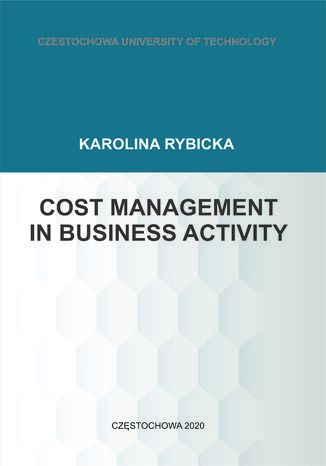
The aim of the work is to present – based on literature studies – definitions and issues connected with cost accounting and indication of key instruments of cost management in modern enterprises. There are used in the work following research methods: literature research as well as case studies.
Next, the trends in modern management accounting are presented, including particular emphasis on the use of modern IT technologies in cost management, and the main trends in modern accounting and cost management are presented. Subsequently, the classification of costs for reporting purposes and for various criteria for management purposes is presented.
Introductory considerations have been made regarding the issue of determining production costs in the basic variants of cost accounting. The main aspects of the full and variable cost accounting and their impact on the financial results of business units were discussed.
The rest of this chapter introduces the main ideas of multi-step and multi-block costing to move on to the costing considerations under the activitybased costing concept. The issues related to the break-even point analysis, price decisions and decisions such as “make or buy” were discussed.
In the sixth chapter, an attempt was made to explain the essence of costs in planning and control processes in the enterprise. The traditional cost budgeting process was discussed, the main assumptions of the budget, the so-called “Master budget” in a manufacturing company.
The concept of Beyond Budgeting was also indicated as an alternative to the traditional management method in a modern enterprise. Concepts such as: product life cycle costing, target costing and kaizen costing, ABM concept, JiT systems, quality costing, value chain analysis, logistics costing and a balanced scorecard are presented here.
The monograph is intended for students, postgraduate students in accounting and management, and practitioners who deal with cost management processes, including IT technologies. However, due to the great versatility of considerations, the book can be addressed to a relatively wide audience who want to expand their existing knowledge in the field of cost management.